

As certainly all of you already know, since 2007, all of Intel's processors are developed on what the company calls a tick-tock product cycle.
What this basically means is that every CPU architecture change (tock) is followed by a die shrunk version of the same core, called a tick.
Every year, there is expected to be one tick or tock.
Since last year during CES 2010, Intel introduced the Westemere processor that was based on the company's 32nm manufacturing process, now it's time for a new architecture to make its introduction to complete the tick-tock cycle.
This new processors microarchitecture is called Sandy Bridge, or the second generation Core processor family as Intel likes to refer to it, and could actually be considered an improved Westmere, since it takes some of the features introduced by Intel back in January 2010 and takes them one step further.
This means that we now get better CPU integrated graphics, improved clock speeds as well as the second generation Turbo Boost technology, to name just a few of the changes introduced by Sandy Bridge.
Together with all of these, we also get a new socket, called LGA 1155, so Sandy Bridge CPUs won't be a drop-in Westmere update, but will require a whole new motherboard.
Although the Sandy Bridge architecture is new, Intel is launching today no less than 29 new processors, most of these being especially designed for notebooks.
Ranging from dual-core to quad-core models, the mobile Sandy Bridge part list is split into two different branches, Intel releasing regular voltage CPUs as well as low-voltage and ultra low-voltage models.
Moving to the desktop sector, these too are split in two sections, Intel developing a so-called “Low power/lifestyle” CPU category that is destined to make its way into All-in-One PCs and other such computers.
Compared to the regular desktop CPU lineup, these have lower operating frequencies and a lower power draw.
The rest of the desktop lineup is made out of another eight processors, two Core i3, four Core i5 and two Core i7 models.
Going from top to bottom, the Core i7 2600 and 2600K feature quad operating cores, have an 95W TDP, 8MB of Level 3 cache memory and support Intel's Hyper-Threading and Turbo Boost technologies.
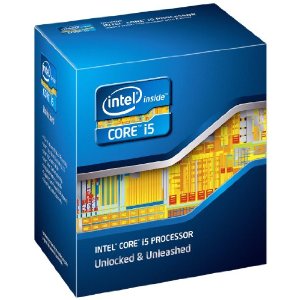
The Core i5 models drop Hyper-threading support, so they can “only” execute four threads at a time, but still carry Turbo Boost.
The TDP has remained unchanged, being estimated at 95W, but the cache memory was reduced to 6MB.
Finally, we get to the two Core i3 models that feature a dual-core design and drop Turbo Boost and AES-NI encryption.
The L3 cache is cut in half compared to the Core i5, but Hyper-Threading is enabled so the OS sees these as quad-core processors.
Reducing the number of cores also means that both Core i3 CPUs have a lower TDP, this being estimated at 65W.
Sandy Bridge architectureAs stated earlier, Sandy Bridge is a new architecture for Intel, so quite a few things are different compared to the previous Westmere chips, although they are both based on the same Nehalem design that was launched more than two years ago.
Since all these details were released by Intel during the company's Fall IDF, the information was already out in the open and analyzed in detail by various websites.
But this won't stop me from presenting you the most important changes that have occurred since the Westmere core.
I'll start things off with the Sandy Bridge front end, where all the instructions are handled by the processor.
The fist change operated by Intel to this part of the chip was to add a so-called “L0 instruction cache” to the decode path that caches instructions as they are decoded and features an 80% hit rate for most applications.
This means that every time the chip receives an instruction it will first check to see if this is found inside this micro-op cache, effectively cutting down power consumption and increasing performance if the instruction is found.
Furthermore, together with this micro-op cache, Intel also introduced a redesigned branch prediction unit that can hit twice as many targets and features a much more effective storage for its history.
Intel Core i7-2600K
CPU Base frequency: 3.4GHz
TDP: 95W
Core/ Threads: 4/8
Max Turbo Frequency: 3.8GHz
DDR3 Speed: 1333MHz
L3 Cache: 8MB
Integrated Graphics: Intel HD 3000
Graphics Max Dynamic Frequency: 1350MHz
Intel Hyper-Threading technology
Intel Advanced Vector Extensions (AVX)
Intel Quick Video Sync
Intel AES-NI
Intel Virtualization technology
Intel Core i5-2500K
CPU Base frequency: 3.3GHz
TDP: 95W
Core/ Threads: 4/4
Max Turbo Frequency: 3.7GHz
DDR3 Speed: 1333MHz
L3 Cache: 6MB
Integrated Graphics: Intel HD 3000
Graphics Max Dynamic Frequency: 1100MHz
Intel Advanced Vector Extensions (AVX)
Intel Quick Video Sync
Intel AES-NI
Intel Virtualization technology


